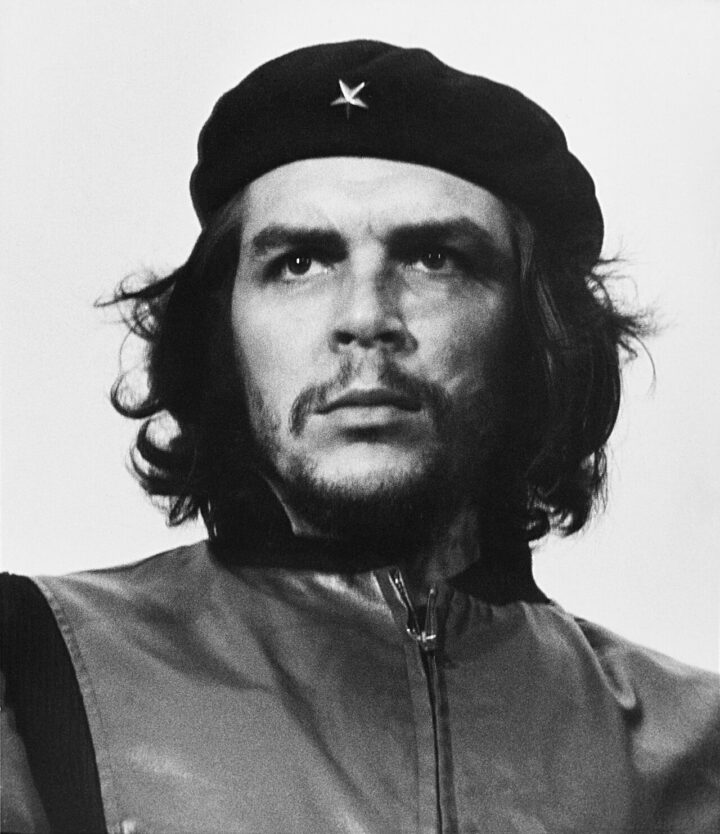
A Guide for a True Revolutionary
I. The Call
This is a call to every revolutionary across the world.
To those who followed Che – his ideology, his passion, his vision. To those who studied his tactics and carried them into the field. To those who were simply seized by the man himself – what he stood for, what he gave up, what he became. He is one of the very few figures in history with a truly universal reach, and the reason is simple – his values are universal. They do not age. They do not belong to one country or one era. They hold wherever there is a human being and a conscience.
This is for those who have dreamed of a world where men are equal and just. Those who have fought for the people – their dignity, their rights, their future. Those who have sacrificed everything for a world free of corruption, cruelty, poverty and malice.
Many have tried. Many movements have risen and fallen. But in his essay Socialism and Man, Che laid out something that went beyond tactics and strategy. He laid out the solution. Read it in the context of his time – and then lift that vision out of its moment and place it squarely in ours. The broader truth he was reaching for does not belong to 1965. It belongs to now.
He spoke of the new man. El Hombre Nuevo. Not a better-managed man. Not a more politically conscious man. A fundamentally transformed man. A man rebuilt from within.
Those around him heard the words. Very few understood what was being said.
This is what he was saying.
II. The Path
Che Guevara was not merely a revolutionary. He was a visionary of the human consciousness.
When he spoke of the new man, he was not speaking of politics. He was not speaking of economics. He was pointing at something far more fundamental – a transformation so complete that every system built on the old man would become unnecessary.
No government has ever changed a man from within. No ideology has reached that deep. Communism tried and left rubble. Democracy promised and delivered compromise. Religion prescribed and produced guilt. Every doctrine ever written has eventually collapsed under the weight of the very human nature it failed to address.
Because the problem was never the system.
The problem is the man inside the system.
A corrupt man does not become honest inside a just institution. He corrupts the institution. Collectively, what we are inside becomes what we are outside. They are so interdependent that we can’t make one strong and another weak.
This is why every revolution has eventually eaten itself.
There is a paradox at the center of human existence.
Without free, conscious, independent individuals, there can be no true collective. But individualism cut off from the collective becomes its own disease. Arbitrary. Self-consuming. Like cells in a body that stop serving the whole and begin serving only themselves.
That is cancer.
The new man is neither the isolated individual nor the dissolved member of a mass. He is something that has rarely existed – a fully integrated human being. Independent and yet inseparable from the whole.
Che died in 1967 in the mountains of Bolivia, fighting for the people as he always had – true to his vision of one America, one humanity, one cause. It was what the moment demanded, and he answered it completely, with his life.
But something else was also happening beneath the surface of the revolution, beneath the ideology and the tactics. An enlightened soul does not arrive in history by accident. He was carrying something down from the universal consciousness and placing it into the world – the concept of El Hombre Nuevo. Not as a political slogan. As a seed. Placed in the world before the world was ready to receive it.
He could not yet name that mechanism. The time had not come. Sahaja Yoga would not arrive until 1970, three years after his death. But he laid down the groundwork. The idea was already out there. And an idea placed by an enlightened soul does not disappear – it waits.
This was not coincidence. This was providence working through a man who gave everything he had to give, in the only way the world was yet ready to receive it.
Something else was coming.
A different kind of revolution – one with no army, no manifesto, no territory to seize.
A revolution of inner transformation.
Man has explored the outer world to its edges. He has split the atom, mapped the genome, breached the atmosphere. And yet he returns home the same man who left – anxious, fragmented, searching.
Because the last frontier is not outer. It is inner.
The Indian scriptures knew this. They mapped the inner world with a precision that modern science is only beginning to approach through breakthroughs in quantum theory. Within the human body exists a subtle system – the actual essence of the universe.
Seven chakras. Three nadis. And at the base of the spine, coiled three and a half times in the triangular sacrum bone – the Kundalini. The primordial energy. Described in the Vedas, in the Upanishads, across thousands of years of recorded inner exploration. Not invented. Discovered. Mapped by those who had made the inward journey and documented it for the rest of the world.
The mechanism was always there. Waiting.
III. The Subtle System
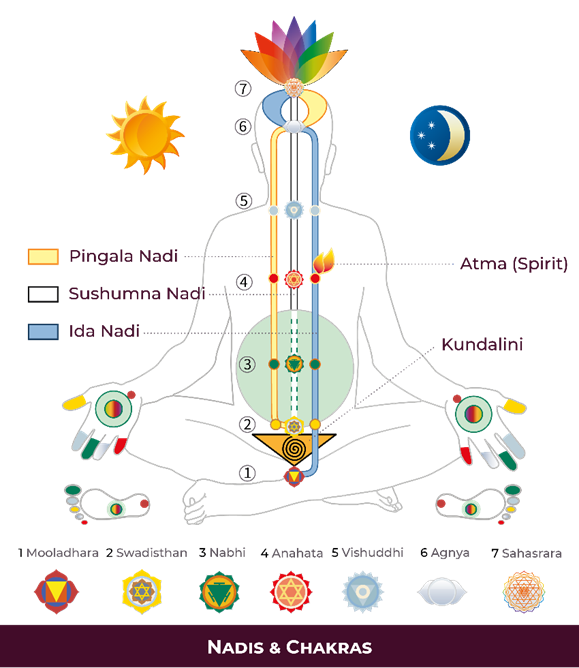
Knowledge of Roots | Know Thyself
The Three Nadis – The Channels
Ida Nadi – the left channel. The channel of the past, of desire, of emotion. When blocked – depression, lethargy, attachment to suffering, the weight of what was.
Pingala Nadi – the right channel. The channel of action, of ego, of future. When blocked – aggression, burnout, the illusion of control, the violence of constant doing.
Sushumna Nadi – the central channel. The channel of evolution, of ascent, of balance. This is the path the Kundalini travels. It opens only when the left and right find their equilibrium.
The Seven Chakras – The Centres
Mooladhara – the first chakra. At the base. The seat of innocence and wisdom. A child’s fearlessness. A saint’s purity. When caught – confusion, moral disorientation, the loss of instinct.
Swadisthana – the second chakra. The seat of creativity and pure knowledge. The source of true art, true thought, true vision. When caught – restlessness, ego driven thinking, the exhaustion of a mind that never rests.
Nabhi – the third chakra. The seat of peace and satisfaction. The still point at the center of every storm. When caught – greed, dissatisfaction, the hunger that no amount of having can fill.
Anahata – the fourth chakra. The heart. The seat of love, of compassion, of the self that cannot be wounded. When caught – fear, insecurity, the slow suffocation of a life lived in self-protection.
Vishuddhi – the fifth chakra. The throat. The seat of collective consciousness, of witness state, of the diplomat and the poet. When caught – guilt, the inability to communicate, the disconnection from the whole.
Agnya – the sixth chakra. Between the eyebrows. The seat of forgiveness, of thought transcended, of the space between stimulus and response. When caught – ego, superego, the prison of the conditioned mind.
Sahastrara – the seventh chakra. The crown. The seat of integration. Where the individual meets the infinite. Where the Kundalini finally opens and the cool breeze flows – the Param Chaitanya, the all pervading power of creation, felt as a living reality on the hands and at the top of the head.
It is experience. Verifiable. Repeatable.
Felt in the body on the central nervous system.
IV. The Awakening
When the Kundalini rises, she does not rise violently.
She rises the way a river finds its course – moving through each chakra, cleaning, clearing, healing. She is the mother energy. She has been waiting within every human being since birth, coiled in the sacrum, patient, ready. When she awakens and pierces the crown, something in the man fundamentally changes. Not his opinions. Not his ideology. His actual state.
A cool breeze begins to flow. Through the hands. Through the top of the head. What the ancient texts called the breath of God. What the Greeks called pneuma. What every tradition touched and named differently. It is the same thing. It has always been the same thing.
This is Self-realisation. This is the birth of the new man.
This awakening was known to the saints and mystics of every age. But it was rare. It required years of preparation, of renunciation, of solitary seeking. One man in a generation, perhaps. A flame passed carefully, secretly, across centuries.
Then came Shri Mataji Nirmala Devi.
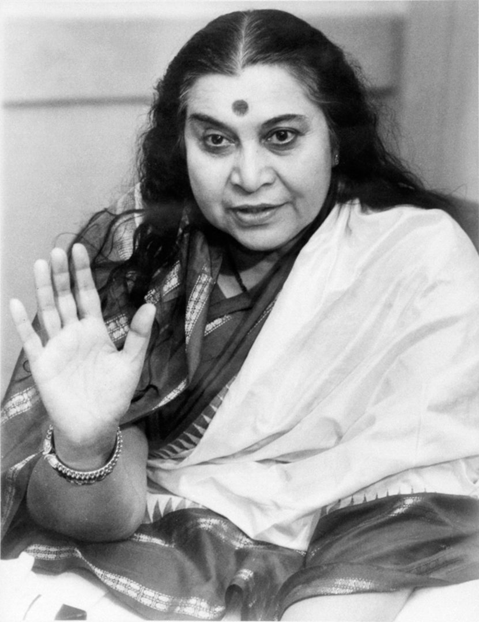
She understood that the time had come. Not for one man in a generation – but for all. The en-masse awakening that every scripture had foretold, that every prophet had pointed toward – She made it possible. She developed the method by which the Kundalini could be awakened in any human being, spontaneously, without years of ritual or renunciation. Mother does not ask Her child to earn her love. She gives it.
Through Sahaja Yoga – sahaja, meaning spontaneous, that which is inborn – She offered Self-realisation freely, to anyone who sought it, across every country, every culture, every background. Not a religion. Not an ideology. An experience. Available to all.
The flame She lit has spread across the world.
Because only an enlightened candle can light another candle. There is no hierarchy in the flame.
The Sahaja Yogis – those who have received their realisation and walk in that light – carry within them the ability to awaken the Kundalini of another.
This is how the revolution of the new man spreads. Through contact with the living flame.
When this awakening takes hold in an individual, the categories that divide human beings begin to lose their grip. But because he has felt it. He has experienced himself as something beyond his name, his nation, his story, his wound.
The integration is real. This is what Che was reaching for. A new man makes a new society. A new society makes the new man thrive. They are not two things. They are one movement.
V. The Future – Cuba
Cuba.
You have bled for freedom more than most nations will ever understand. You took on an empire with almost nothing and did not break. You produced a man whose face became the symbol of resistance for every oppressed people on every continent. You understood, long before it was fashionable to understand, that the collective must act – that one man’s freedom is incomplete while another man suffers. You lived that truth. You paid for it.
But the chokehold has not loosened. The imperial grip tightens. The embargo strangles. The pressure is designed to exhaust, to humiliate, to make the Cuban people doubt what they know – that they are right, that they have always been right, that no people should live under the boot of another’s economic violence.
And yet here Cuba stands.
You have sought allies before – from the Soviets, from the Chinese, from whoever extended a hand when the walls were closing in. That help was real, and it mattered in its moment. But it came with its own weight. Its own strings. Its own agenda. Political alliances are made between interests, not between souls – and interests shift, parties change, and what was offered can always be withdrawn.
Cuba knows this.
The friendly nations have not abandoned Cuba. But their hands are tied. The blockade has made even goodwill impotent.
When human power reaches its limit, there is only one place left to turn.
Self-realisation connects man to the divine power through the Spirit, as living reality felt in the body. When the subtle system awakens, the powers of each chakra come alive. They work for your benevolence. They fight the negativity within and without. They protect you. They elevate you. And this power is supreme – it thinks, it loves, and it solves your worldly problems too.
When people are collectively realised and collectively desire their freedom, it will manifest.
This is not a distant promise. Sahaja Yoga is already alive and spreading across nations, across every boundary that politics has failed to dissolve. It has been given to the world by Shri Mataji Nirmala Devi, and it has not yet fully reached Cuba.
That changes now.
To the Cuban people –
The revolution your fathers and mothers fought was the outer revolution. It was necessary. It was real. It was heroic. But it was always the first step, not the last.
The revolution that is now being called for is the inner one. And it asks of you exactly what every revolution has always asked – courage. The courage to seek. The courage to go where the seeking leads. The courage to abandon what has not worked and walk toward what will.
You are not being asked to surrender the fire. You are being asked to direct it inward.
The seeking has always been there in the Cuban soul – the hunger for something just, something true, something that cannot be taken away by any power on earth. That seeking is about to be answered. By the awakening of the Kundalini within every Cuban who chooses it. By the cool breeze that no embargo can stop. By the Self-realisation that no imperial power can confiscate.
Sahaja Yogis are already in the world. They are already enlightened. They will come. They ask nothing in return – because there is nothing to ask. This is not a transaction. It is one candle reaching toward another in the dark.
Find them.*
The final revolution Che prophesied is not coming. It is here! It began the moment Shri Mataji made the awakening possible for all. It will manifest for Cubans – who have never once turned away from the harder, truer path – turn inward and claim the one freedom that was always theirs.
Cuba will rise. Because pressure has never broken you – it has only made you more certain of what you are fighting for.
It’s time for the ultimate revolution, and the fight is for the Spirit.
And the Spirit cannot be sanctioned. Cannot be embargoed. Cannot disappear in the night.
It is within you. Ready to empower you.
Yet again, Cuba will show the world the way.
We embrace you with all our revolutionary fervor!
*Footnote: Sahaja Yogis are present across the world in many countries and communities. The Cuban people seeking this path will find brotherhood and guidance readily available.
[Madhavi G +91 8108108599, Vikrant S +91 7517311997]
Excerpts from Socialism and Man by Che Guevara
In his essay often cited in Socialism and Man in Cuba, he argues that true revolution is internal before it is political.
He wasn’t just talking about systems; he was talking about:
- Transformation of ego
- Detachment from material incentives
- Ethical responsibility to others
- On the danger of the wrong path
“There is a danger of not seeing the forest because of the trees. Pursuing the chimera of achieving socialism with the aid of the blunted weapons left to us by capitalism – it is possible to come to a blind alley. And the arrival there comes about after covering a long distance where there are many crossroads and where it is difficult to realise just when the wrong turn was taken. Meanwhile, the adapted economic base has undermined the development of consciousness.”
This is Che’s own warning that every political and economic path leads eventually to a dead end. He wrote this in 1965. History proved him right on every count. What you read above is answer to the blind alley he warned about.
—
2. On the new man
“To build communism, a new man must be created simultaneously with the material base.”
Che writes that to build a new society, the new man must be created simultaneously – not after the material foundations are laid, not as a consequence of political change, but alongside it and within it.
—
3. On the man of the future glimpsed
“It was the first heroic period in which men strove to earn posts of great responsibility, of greater danger, with the fulfillment of their duty as the only satisfaction. In our revolutionary educational work, we often return to this instructive topic. The man of the future could be glimpsed in the attitude of our fighters.”
He saw it. He saw El Hombre Nuevo. Briefly, in those moments of total selfless devotion. He spent the rest of his life trying to make that glimpse permanent. And that is exactly what the awakening produces, not in moments of extreme danger, but as a permanent living state.
—
4. On the individual as unfinished
“I shall now attempt to define the individual, the actor in this strange and moving drama that is the building of socialism, in his two-fold existence as a unique being and a member of the community. I believe that the simplest approach is to recognise his un-made quality: he is an unfinished product. The flaws of the past are translated into the present in the individual consciousness and constant efforts must be made to eradicate them.”
The Kundalini awakening is precisely the mechanism that clears what Che identified here – the residue of the past carried within human consciousness. The catches on the chakras are exactly those flaws translated from past into present.
—
5. On the complete spiritual rebirth
“Man still needs to undergo a complete spiritual rebirth in his attitude towards his work, freed from the direct pressure of his social environment, though linked to it by his new habits. That will be communism.”
This is perhaps the single most extraordinary line he ever wrote. He calls what he is pointing toward a complete spiritual rebirth. Not an economic restructuring. Not a political transformation. A spiritual rebirth. And he says that will be communism. Meaning the end goal of everything he fought for was not a system. It was a state of being. A spiritually reborn man.
—
6. On the dialectical unity of individual and collective
“What is hard to understand for anyone who has not lived the revolutionary experience is that close dialectical unity which exists between the individual and the mass, in which both are interrelated, and the mass, as a whole composed of individuals, is in turn interrelated with the leaders.”
He describes something that he himself calls difficult to understand for anyone who has not lived it – the individual and collective as inseparable, co-dependent, one movement. He felt it in the revolution. The awakening makes it the permanent state of the realised human being.
—
7. On moral character as the only true instrument
“That is why it is so important to choose correctly the instrument of mass mobilization. That instrument must be fundamentally of a moral character, without forgetting the correct use of material incentives, especially those of a social nature.”
He argues that the instrument of mass transformation must be fundamentally of a moral character. Not economic incentive. Not political force. Moral. This is the closest Che comes to pointing at the inner frontier. He cannot yet name what that instrument is. Sahaja Yoga is that instrument.
—
8. On consciousness and society as a school
“As I already said, in moments of extreme danger it is easy to activate moral incentives; to maintain their effectiveness, it is necessary to develop a consciousness in which values acquire new categories. Society as a whole must become a huge school.”
He was pointing at a collective shift in consciousness, which is precisely what en-masse Self-realisation produces. Not society as a political school. As a school of awakened consciousness.
—
9. On the twenty-first century man
“It is the twenty-first century man whom we must create, although this is still a subjective and unsystematic aspiration. This is precisely one of the basic points of our studies and work; to the extent that we make concrete achievement on a theoretical base or vice versa, that we come to broad theoretical conclusions on the basis of our concrete studies, we will have made a valuable contribution to Marxism-Leninism, to the cause of mankind.”
He names it directly – the twenty-first century man. He admits he cannot yet systematise it. He knows it is the central task. This is the most explicit admission in the entire essay that he was reaching toward something beyond the framework available to him.
10. On inner wealth over material wealth
“It is not a question of how many kilograms of meat are eaten or how many times a year someone may go on holiday to the sea shore or how many pretty imported things can be bought with present wages. It is rather that the individual feels greater fulfillment, that he has greater inner wealth and many more responsibilities.”
This is Che explicitly rejecting material wellbeing as the measure of the new man. Inner wealth, greater fulfilment, is the standard. This is the language of spiritual transformation dressed in revolutionary clothes.
—
11. On love as the revolutionary force
“Let me say, with the risk of appearing ridiculous, that the true revolutionary is guided by strong feelings of love. It is impossible to think of an authentic revolutionary without this quality.”
This is perhaps the most spiritually charged line in the entire essay. He knew it sounded absurd in political writing; he says so himself. And yet he said it. Love as the engine of revolution. The Anahata chakra, the heart centre is the seat of exactly this. The new man does not act from ideology. He acts from love.
—
12. On the new man as an ongoing process
“We can see the new man who begins to emerge in this period of the building of socialism. His image is as yet unfinished; in fact it will never be finished, since the process advances parallel to the development of new economic forms.”
He sees the new man as emerging – not yet arrived. A process. Your piece completes that process by naming the mechanism through which the emergence becomes actual and permanent.
—
13. On the individual achieving total awareness
“It is still necessary to accentuate his conscious, individual and collective, participation in all the mechanisms of direction and production… He will thus achieve total awareness of his social being, which is equivalent to his full realisation as a human being, having broken the chains of alienation.”
He uses the word realisation. In spiritual tradition this word has a precise meaning, the direct experience of one’s true nature beyond the conditioned self. He arrives at it through a political argument but the destination he names is what Sahaja Yoga produces, full realisation, chains of alienation broken, total awareness.
—
14. On the original sin of the intellectuals
“To sum up, the fault of many of our intellectuals and artists is to be found in their ‘original sin’: they are not authentically revolutionary.”
He uses the phrase original sin – a theological concept, deliberately and without apology, in a Marxist essay. The language of spiritual corruption entering the language of political analysis. The man who is not authentically transformed from within carries that original flaw into everything he builds.
Excerpts from various speeches and writings
On the inner voice and the universe
– Motorcycle Diaries
“The entire universe drifted rhythmically by, obeying the impulses of my inner voice.”
Written beside the sea, in a moment of complete stillness. The universe obeying the inner voice. This is not political writing. This is a man touching something he has no framework to explain, the connection between his inner state and the movement of everything around him. In Sahaja Yoga this is precisely what the awakened state feels like – the vibratory awareness through which the Param Chaitanya is felt.
“Every day people straighten up the hair, why not the heart?”
This is one of the most quietly devastating line he ever wrote. Simple. Direct.
“The best form of saying is being.”
Not speaking. Not writing. Not theorising. Being. The transformed state itself is the communication. This is the language of a realised soul – one who understands that the awakened human being does not need to persuade anyone of anything. His very presence is the argument.
These passages show that Che was mapping the same territory this piece covers, from the outside, with the only tools his time offered him. He arrives at revolution as the only framework available to him to act on what he feels. He pushes that framework to its absolute limit – and then beyond it – naming things that have no place in Marxist theory: love, spiritual rebirth, the inner voice, the great guiding spirit, the heart that needs straightening.
Read together, they make a stand that this piece is not an interpretation of Che. It is the completion of what he started.
JEAN-PAUL SARTRE – philosopher, who met Che personally in Cuba
Sartre spent weeks with him and came away saying he was “the most complete human being of our age.”
JON LEE ANDERSON – biographer, author of the definitive biography Che Guevara: A Revolutionary Life
Anderson, who spent years researching Che and interviewing those who knew him, observed that for young Cubans even today, “Che has always inhabited for them this otherworldly place. He exists in this spiritual realm.”
“In him, one finds the features of the true revolutionary… a man of deep convictions, of profound feelings, of great sensitivity.”
By Fidel Castro
“Che possessed, to an extraordinary degree, the virtues that can be defined as the highest virtues of a revolutionary…
“And one might say that he was a man who belonged more to the future than to the present.”
“If we want to express how we want the men of future generations to be, we must say: let them be like Che!”
“If we want to say how we want our children to be educated, we must say: we want them to be educated in the spirit of Che!”
“If we want to express how we wish our children to be, we must say with all our heart: we want them to be like Che.”
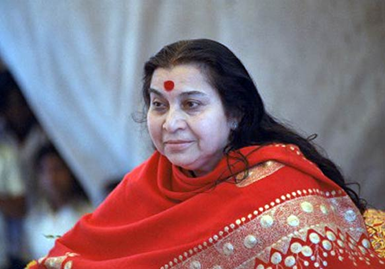
“You cannot know the meaning of your life until you are connected to the power that created you.”
— Shri Mataji Nirmala Devi
Humbly Submit at the Holy Feet of the Divine Mother

